December 4, 2015
By Chip Berlet
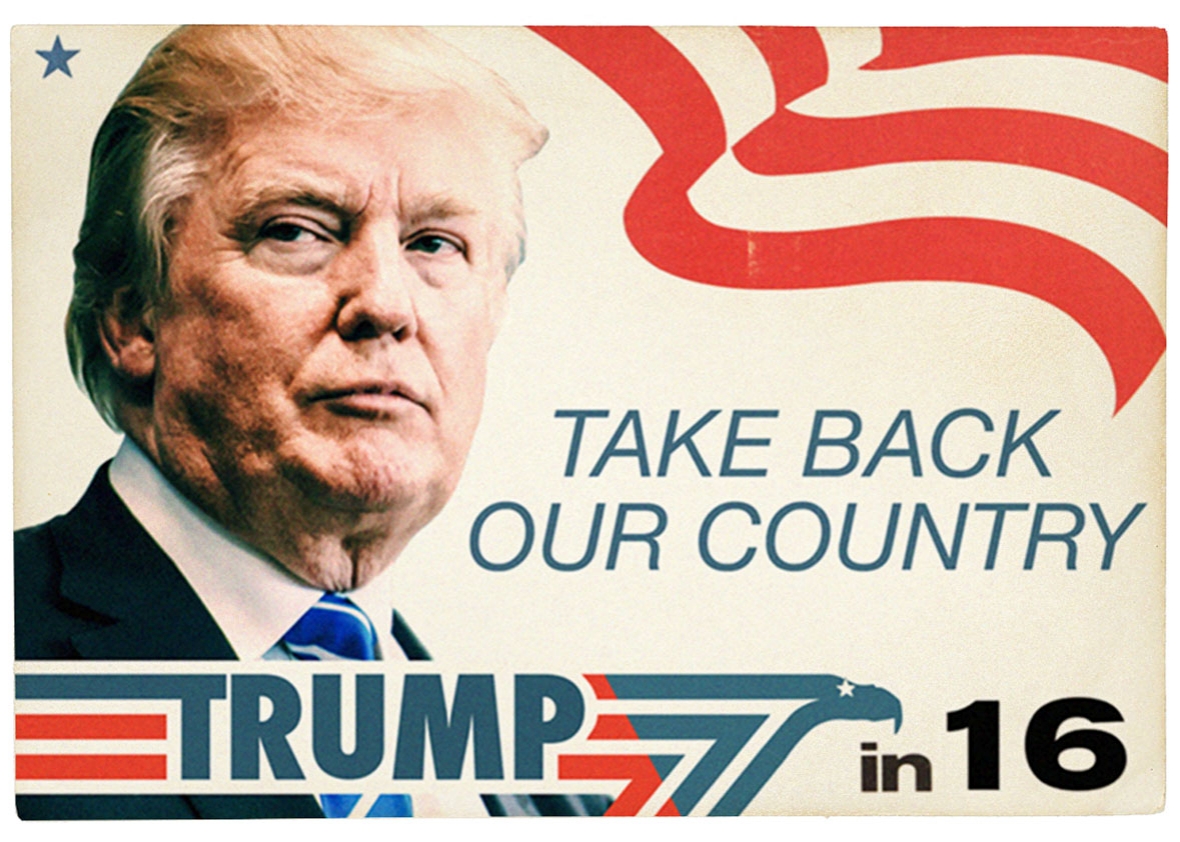
Demagogic rhetoric targeting unpopular groups of people can incite violence. Republican frontrunner Donald Trump can claim he never told his followers to hurt anyone, and perhaps avoid legal consequences, but Trump is morally responsible. His nasty vilification produces “scripted violence.” The victims of Trumps rhetoric are piling up. The term “incited violence” also describes this process that draws from the media studies concept of “constitutive rhetoric.” Incitement to violence also has legal ramifications.
Last August the Washington Post in an editorial warned that “Mr. Trump’s immigrant-bashing rhetoric breeds violence.”[1] In a column, Robert Reich collected a long list of violence in the path of Republican bigoted blustering. Those that commit bigoted violence “often take their cues from what they hear in the media” wrote Reich in November following the murderous attack on the Planned Parenthood clinic in Colorado Springs.[2] Reich said “the recent inclination of some politicians to use inflammatory rhetoric is contributing to a climate” in which violence against targeted groups is real.
Writing about Trump’s nasty rhetoric, and the alarming welcome it has found during the Republican pre-primary media blitz, American Prospect journalist Adele Stan put it bluntly:
===What Trump is doing, via the media circus of which he has appointed himself ringmaster, is making the articulation of the basest bigotry acceptable in mainstream outlets, amplifying the many oppressive tropes and stereotypes of race and gender that already exist in more than adequate abundance.[3]
And it is not just Trump. Some of the other Republican hopefuls closer to the Christian Right also demonize gay people and feminists, and excoriate defenders of reproductive rights. One militant slogan is “If abortion is murder, then act like it is.”
How does the process of scripted violence work? The leaders of organized political or social movements sometimes tell their followers that a specific group of ‘Others’ is plotting to destroy civilized society. History tells us that if this message is repeated vividly enough, loudly enough, often enough, and long enough—it is only a matter of time before the bodies from the named scapegoated groups start to turn up. Social science since World War II and the Nazi genocide has shown that under specific conditions, virulent demonization and scapegoating can—and does—create milieus in which the potential for violence is increased. What social science cannot do is predict which individual upon hearing the rhetoric of clear or coded incitement and turn to violence.
In their study of how media manipulation for political ends can help incite genocide, Frohardt and Temin looked at ‘content intended to instill fear in a population’, or ‘intended to create a sense among the population that conflict is inevitable’. [4] They point out that ‘media content helps shape an individual’s view of the world and helps form the lens through which all issues are viewed’. They found two patterns: content creating fear and content creating a sense of inevitability and resignation that violence was about to occur. According to the authors:
- In Rwanda prior to the genocide a private radio station tried to instill fear of an imminent attack on Hutus by a Tutsi militia.
- In the months before [conflicts] in Serbia, state television attempted to create the impression that a World War II–style ethnic cleansing initiative against Serbs was in the works.
- Throughout the 1990s Georgian media outlets sought to portray ethnic minorities as threats to Georgia’s hardfought independence.
Frohardt and Temin found that media can create a sense within a target population of potential perpetrators of violence that ‘imminent’ and serious threats were to be expected, even though ‘there was only flimsy evidence provided to support them’,
===When such reporting creates widespread fear, people are more amenable to the notion of taking preemptive action, which is how the actions later taken were characterized. Media were used to make people believe that ‘we must strike first in order to save ourselves’. By creating fear the foundation for taking violent action through ‘self-defense’ is laid.
In approaching some of these questions social science uses the concepts of ‘constitutive rhetoric’; the vilification, demonization, and scapegoating of a named ‘Other’; coded rhetorical incitement by demagogues; the relationship between conspiracism and apocalyptic aggression; and the process of scripted violence by which a leader need not directly exhort violence to create a constituency that hears a call to take action against the named enemy. These processes can and do motivate some individuals to adopt a ‘superhero complex’ which justifies their pre-emptive acts of violence or terrorism to ‘save society’ from imminent threats by named enemies ‘before it is too late’.
Conspiracism evolves as a worldview from roots in dualistic forms of apocalypticism. Fenster argues that persons who embrace conspiracy theories are simply trying to understand how power is exercised in a society that they feel they have no control over. Often they have real grievances with the society—sometimes legitimate—sometimes seeking to defend unfair power and privilege. [5] Nonetheless, Conspiracism can appear as a particular narrative form of scapegoating that frames demonized enemies as part of a vast insidious plot against the common good, while it valorizes the scapegoater as a hero for sounding the alarm. [6]
Conspiracist thinking has appeared in mainstream popular discourse as well as in various subcultures in the United States and Europe. [7] In contemporary examples we can see conspiracy theories built around fears of liberal subversion by President Obama;[8] fears of government attempts to merge the United States, Canada, and Mexico into a North American Union; [9]and fears that Muslims living in the United States are plotting treachery and terrorism.[10] (Contnued)
Continue reading Donald Trump, Nasty Rhetoric, and Scripted Violence