
American Torture – Past, Present, and Future? – Beyond the Senate Torture Report

By Rebecca Gordon
TomDispatch via Portside

DEc 18, 2014 – It’s the political story of the week in Washington. At long last, after the endless stalling and foot-shuffling, the arguments about redaction and CIA computer hacking [1], the claims [2] that its release might stoke others out there in the Muslim world to violence and "throw [3] the C.I.A. to the wolves," the report — you know which one — is out.  Or at least, the redacted executive summary of it is available to be read and, as Senator Mark Udall said before its release, "When this report is declassified, people will abhor what they read. They’re gonna be disgusted. They’re gonna be appalled. They’re gonna be shocked at what we did."

So now we can finally consider [4] the partial release of the long-awaited report from the Senate Select Committee on Intelligence about the gruesome CIA interrogation methods used during the Bush administration’s "Global War on Terror." But here’s one important thing to keep in mind: this report addresses only the past practices of a single agency. Its narrow focus encourages us to believe that, whatever the CIA may have once done, that whole sorry torture chapter is now behind us.

In other words, the moment we get to read it, it’s already time to turn the page. So be shocked, be disgusted, be appalled, but don’t be fooled. The Senate torture report, so many years and obstacles in the making, should only be the starting point for a discussion, not the final word on U.S. torture. Here’s why.

Mainstream coverage of U.S. torture in general, and of this new report in particular, rests on three false assumptions:

1. The most important question is whether torture "worked."

2. U.S. torture ended when George W. Bush left office.

3. The only kind of torture that really "counts" happens in foreign war zones.

Let’s look at each of these in order.

False Assumption #1: The only question is "Did it work?"

Maybe torture "worked" on occasion. Probably it didn’t. But it doesn’t matter because torture is illegal under U.S. and international law, and it’s a moral abomination.

The Senate report’s first finding — and the one that much of a highly predictable debate will focus on — is that the CIA’s "enhanced interrogation techniques" were "ineffective" in identifying the perpetrators of 9/11, producing actionable intelligence, or preventing terrorist attacks. In response, the rhetoric is already flying. The Republicans (except for Senator John McCain [5]) are jumping up and down shouting [6] "It did work! It did!" The president’s own CIA director, John Brennan, has issued his denunciation of the report. While acknowledging [7] that "the Agency made mistakes," he, too, insisted that torture "worked." (A couple of days later, he backtracked, suggesting instead that the answer to this question was actually "unknowable [8].") Other former officials of the Agency are chiming in [9] big time.

Continue reading American Torture – Past, Present, and Future? – Beyond the Senate Torture Report
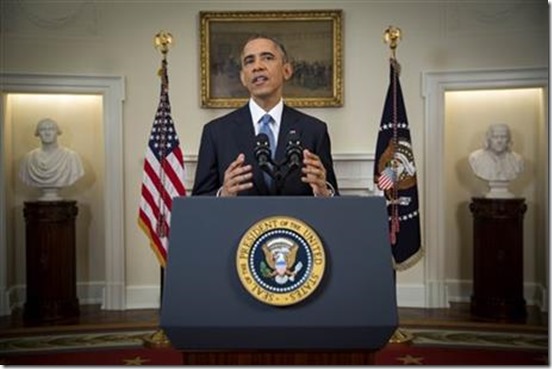
Obama: US re-establishing relations with Cuba

Obama-Cuba
Click on image above to see entire AP story
Click Here to see CCDS National Coordinating Committee Member Harry Targ’s 2012 “Revisiting the Cuban revolution” article.

President Barack Obama announced the re-establishment of diplomatic relations and an easing in economic and travel restrictions on Cuba Wednesday, declaring an end to America’s "outdated approach" to the communist island in a historic shift aimed at ending a half-century of Cold War enmity.

How Runaway Economic Inequality and Racism Are Linked to Police Killings


By Les Leopold
Alternet


Dec 15, 2014 – Why are white cops shooting unarmed black men?

On one level the story is simple: racism. Too many police officers fear people of color in the neighborhoods they patrol, and are likely to over-react with force during encounters. The local courts also engage in discrimination by failing to indict the killers, even when captured on video, as in the brutal police slaying of Eric Garner in Staten Island, NY. Both the policing and the court system obviously reflect the polarization of our communities, and our inability to escape the legacy of slavery, more than 150 years after emancipation.

But racism only accounts for part of the story. We also must understand how judicial racism and even police violence are deeply connected to the financialization of the economy and runaway inequality.

It is not by accident that America has become both the most unequal developed nation in the world, and the nation with the largest prison population. We’re number one in police killings, incarceration and inequality—not Russia, not China. Our national self-image so steeped in the idea of freedom has not caught up with these ugly realities.

Racism is has been with us for centuries, but something very new happened in America around 1980 that set the stage for these police killings. Something very big is transforming us into the first democratic police state in human history.

Incarceration Nation

Please look carefully at the chart below, and consider the history of American racism, violence and protest.

From 1920 to around 1980, the American prison population held steady, even as our population grew rapidly. One could easily argue that racism was much more virulent during this period, especially in the Jim Crow South, from the hundreds of lynchings in the 1920s to violent repression of civil rights activists in the 1950s and ’60s. So unless you believe that racism changed for the worse since 1980, then it alone can not possibly account for the explosive rise of the prison population.

Even during the turbulent 1960s with its many demonstrations, and violent inner-city upheavals, the prison population hardly budged. Similarly, Nixon’s infamous war on drugs, launched in June 1971, also did not boost the prison population during the 1970s.

Then something major changed to send the prison population soaring. What happened?

The explosive rise of the American prison population

Most explanations focus on complexities of the shift to mandatory sentencing. Judges were compelled by harsh new sentencing laws to jail even those convicted of minor crimes, and to hand out sentences much longer than appropriate to the infraction. Because of urban housing segregation by race and income, lower income neighborhoods experienced higher crime rates, made even higher by the futile enforcement of drug prohibition. As the police enforcement increased, a disproportionate number of people of color were funneled into prison. Although non-Hispanic blacks form only 13.6 of the U.S. population, they are 39.4 percent of the prison population [3]. The prison population further swelled with bigger backlogs in under-funded courts, bail that cannot be met, and inadequate legal services for the poor.

But the gargantuan climb in our prison population also corresponds with the dramatic rise in inequality. (The chart below compares the incomes of the top 1 percent with the bottom 90%. Note how the gap rises virtually in lockstep with the rise in our prison population.) This uncanny correspondence suggests that we must consider other explanations that explore the links between runaway inequality and runaway incarceration.

The Financialization of the Economy and the Destruction of Good-Paying Industrial Jobs

America adopted draconian conservative economic policies starting in the late 1970s with the advent of the Better Business Climate model. The idea was to cut taxes on the rich and deregulate business, especially Wall Street. That combination was supposed to put money in the hands of the few, who would then heavily invest it in our economy, thereby creating an enormous economic boom. Good jobs and rising incomes for all those willing to work would soon follow. It didn’t happen. Instead these Better Business Climate policies led to runaway inequality, the destruction of middle-income jobs, and wage-stagnation for the vast majority of working people.

Continue reading How Runaway Economic Inequality and Racism Are Linked to Police Killings