
Charleston Emanuel AME Wasn’t The First


Black church burned in Knoxville, TN

The South’s Sordid History of Attacks on Black Churches

By Chris Kromm
Facing South

June 20, 2015 – In the wake of the heinous murders of nine members of Charleston’s Emanuel African Methodist Episcopal Church this week, many have pointed to historic congregation’s central role in the city’s African-American community.

As Clementa Pinckney, the church’s pastor and state legislator who was killed in the shooting, told a group of visitors in 2013 [1], "It’s a very special place because this site, this area, has been tied to the history and life of African Americans since about the early 1800s."

The massacre called to mind the long history of racially-motivated attacks on black churches in the South, which have been targeted precisely because of their role as not just houses of worship but also sanctuaries from racism and a gathering space for community action.

Sarah Kaplan in The Washington Post [2] looked at Emanuel A.M.E.’s history as a target for racist violence:

It was founded by worshipers fleeing racism and burned to the ground for its connection with a thwarted slave revolt. For years its meetings were conducted in secret to evade laws that banned all-black services. It was jolted by an earthquake in 1886. Civil rights luminaries spoke from its pulpit and led marches from its steps. For nearly two hundred years it had been the site of struggle, resistance and change.

Attacks on black churches continued through the Jim Crow era, and intensified again in the wake of the 1950s civil rights movement. The Sept. 15, 1963 bombing of the 16th Street Baptist Church in Birmingham, Alabama by members of the Ku Klux Klan [3], which killed four girls and injured 20 others, marked a turning point in the escalation of the Southern civil rights struggle.

In the 1990s, black churches again emerged as targets in a wave of arsons and firebombings [4]. As the Institute for Southern Studies reported in its magazine Southern Exposure in 1996 [pdf] [5], fires damaged 230 churches in a 21-month span starting in August 1994, when young white men linked to the neo-Nazi group Aryan Faction threw a Molotov cocktail and shot bullets into a predominantly black church in Clarksville, Tennessee. The assailants left a note, saying, "AF wants you to leave our white community. You Coons! Coon hunting season is open."

As the Southern Exposure investigation found, more than half of the arsons that swept through the South in the mid-1990s involved black churches, even though African-American congregations comprised only a fifth of churches in the region. Eighty percent of those arrested for the fires were white. (Continued)

Continue reading Charleston Emanuel AME Wasn’t The First

Study Shows How the US Could Achieve 100% Renewable Energy by 2050

A study points the way to a renewable energy reliant United States in just 35 years

By Chris Wood

Gizmag.com

June 9, 2015 – A team of researchers led by Stanford University’s professor Mark Z. Jacobson has produced an ambitious roadmap for converting the energy infrastructure of the US to run entirely on renewable energy in just 35 years. The study focuses on the wide-scale implementation of existing technologies such as wind, solar and geothermal solutions, claiming that the transition is both economically and technically possible within the given timeframe.

As a starting point, the researchers looked at current energy demands on a state-by-state basis, before calculating how those demands are likely to evolve over the next three and a half decades. Splitting the energy use into residential, commercial, industrial and transportation categories, the team then calculated fuel demands if current generation methods – oil, gas, coal, nuclear and renewables – were replaced with electricity.

That already sounds like a mammoth task, but its true complexity comes to light when you consider that for the purposes of the study, absolutely everything has to run on electricity. That means everything from homes and factories to every vehicle on the road.

As it turns out, while the calculations might be complex, the results are extremely promising.

"When we did this across all 50 states, we saw a 39 percent reduction in total end-use power demand by the year 2050," said Jacobson. "About 6 percentage points of that is gained through efficiency improvements to infrastructure, but the bulk is the result of replacing current sources and uses of combustion energy with electricity."

In order for each state to make the transition, it would focus on the use of the most easily available renewable sources. For example, some states get a lot more sunlight than others, some have a greater number of south-facing rooftops, while coastal states can make use of offshore wind farms, and for others geothermal energy is a good option. (Continued)

Continue reading Study Shows How the US Could Achieve 100% Renewable Energy by 2050

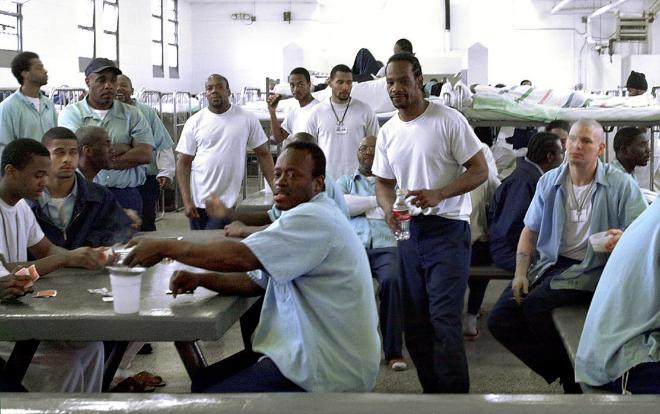
Mass Incarceration: The Most Important Political Issue of 2016 No One Wants to Talk About


By David J. Krajicek 

 AlterNet

June 14, 2015  -  Five years ago, while America clutched a tin cup during the recession, politicians shouted hallelujah about saving money by reducing the country’s grossly bloated prison population.

The national inmate count declined fractionally for a few years, reaping celebratory headlines. One expert quoted by the New York Times declared “the beginning of the end of mass incarceration.”

Then came the bipartisan miracle–the Koch brothers linking arms with libertarians and progressives to declare support for criminal justice reform, prompting dreamy talk about cutting prison rolls in half, to levels last seen before mandatory minimum madness began in the 1990s.

But as another legislative season toddles to a close, where are the broad reforms?

“Right now, the focus is still on reforming sentencing for nonviolent, first-time offenders,” says Nkechi Taifa [3], a senior policy analyst with the Open Society Foundations. “This the safe, low-hanging fruit of reform…And it’s like pulling hen’s teeth to even get that kind of legislation passed.”

How will the nation’s prison population decline significantly if there is no political will to reform hard-time sentences, including lifers?

“It won’t,” says Julie Stewart, president of Families Against Mandatory Minimums [4].

In fact, Pew now projects [5] that state prison populations will increase by 3 percent over the next four years, begging the question of whether the heralded end of mass incarceration was dead on arrival as a political issue.

Lifers Excluded from Reforms

America’s growing lifer population is a quandary that pols choose to ignore.

“This population is treated as out of sight, out of mind,” says Ryan King [6], an Urban Institute senior fellow who tracks sentencing trends. “It’s like we don’t want to deal with the problem—and life-without-parolers (LWOPs) are the most extreme example.”

A sentence of life without parole has become popular (and more palatable to some jurors) as capital punishment has ebbed in many states. Some Americans find solace in the adage that there is just one way for an LWOP to leave prison: in a hearse.

“It condemns you to die in prison,” Open Society’s Taifa told me. “It doesn’t matter how much you’ve changed, no matter that you’ve aged out of committing crime, no matter how much you’ve tried to better yourself. There is no hope for you.”

Two years ago, Ashley Nellis of The Sentencing Project reported [7] that state and federal prisons held 160,000 lifers, nearly 50,000 of whom were LWOPs, with had no hope for parole.

For context, the number of lifers incarcerated today nearly matches the entire U.S. prison population in 1968. The lifer population began to mushroom in the 1980s—34,000 in ’84, 70,000 in 1992, 128,000 in 2003. The boom in life-without-parolers started in the early ‘90s, just as the crime rate began its precipitous drop. The number of LWOPs nearly tripled between 1992 and 2003, from 12,500 to about 34,000. (continued)

Continue reading Mass Incarceration: The Most Important Political Issue of 2016 No One Wants to Talk About